Now in its eighth year, HIAS’ Refugee Shabbat is a powerful demonstration of the Jewish community’s support for and solidarity with refugees.
In the UK, HIAS+JCORE has been participating in the project since 2022. Against a backdrop of rising anti-refugee sentiment and increasingly divisive politics in this country, Refugee Shabbat 2026 came at a pivotal moment.
This year, a record 66 communities and groups in Britain signed up, more than double from 2025. Refugee Shabbat’s core message of compassion and welcome – central to the Jewish values that lead HIAS+JCORE’s work – showed that British Jewry continues to stand alongside displaced people.
“It is truly remarkable to have this many communities taking part in Refugee Shabbat this year,” said Yael Peleg, HIAS+JCORE’s Community Engagement Director. “There is so much inspiring work being done across the Jewish community to welcome refugees, and Refugee Shabbat 2026 is a wonderful opportunity to celebrate it.”
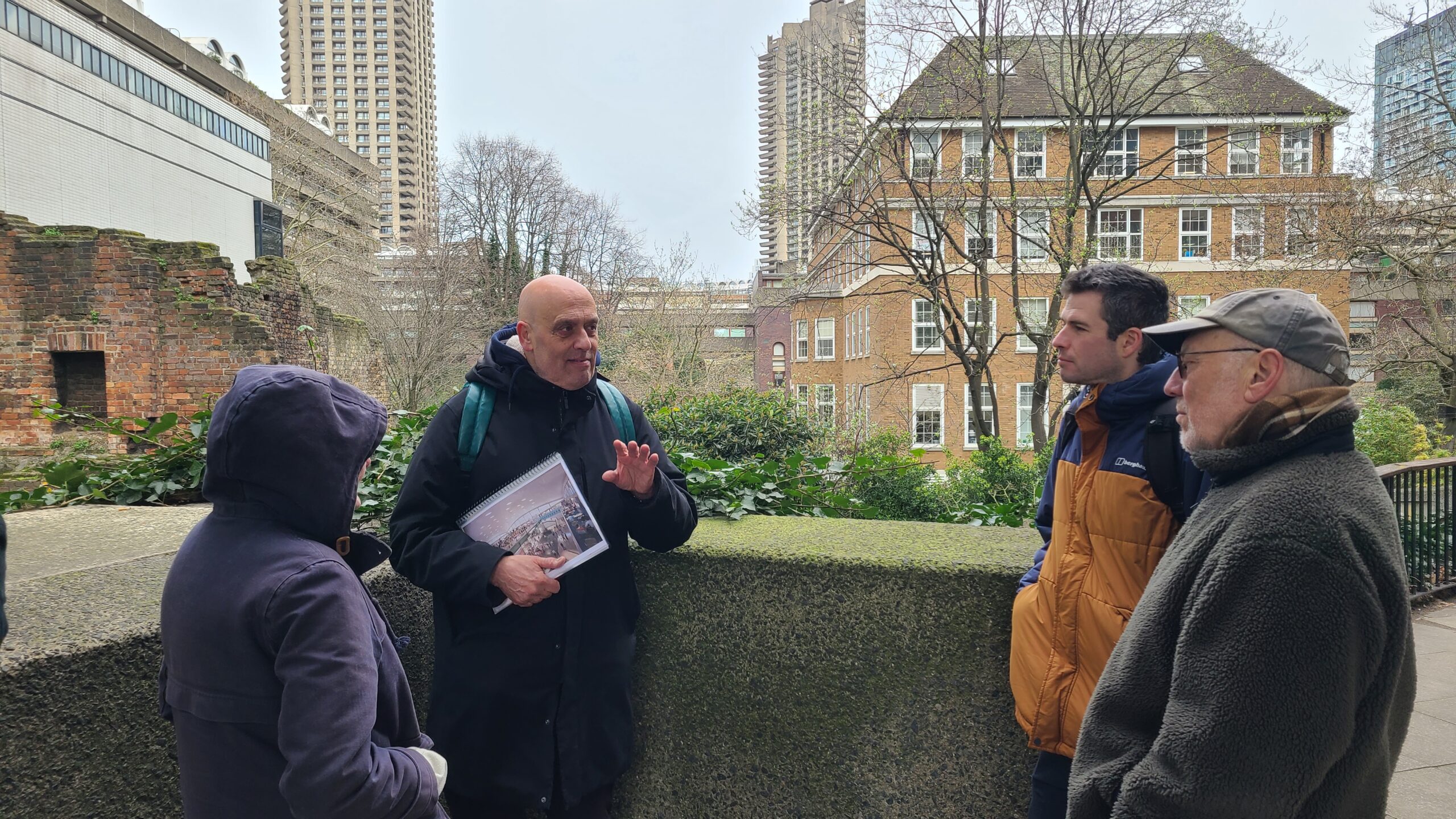
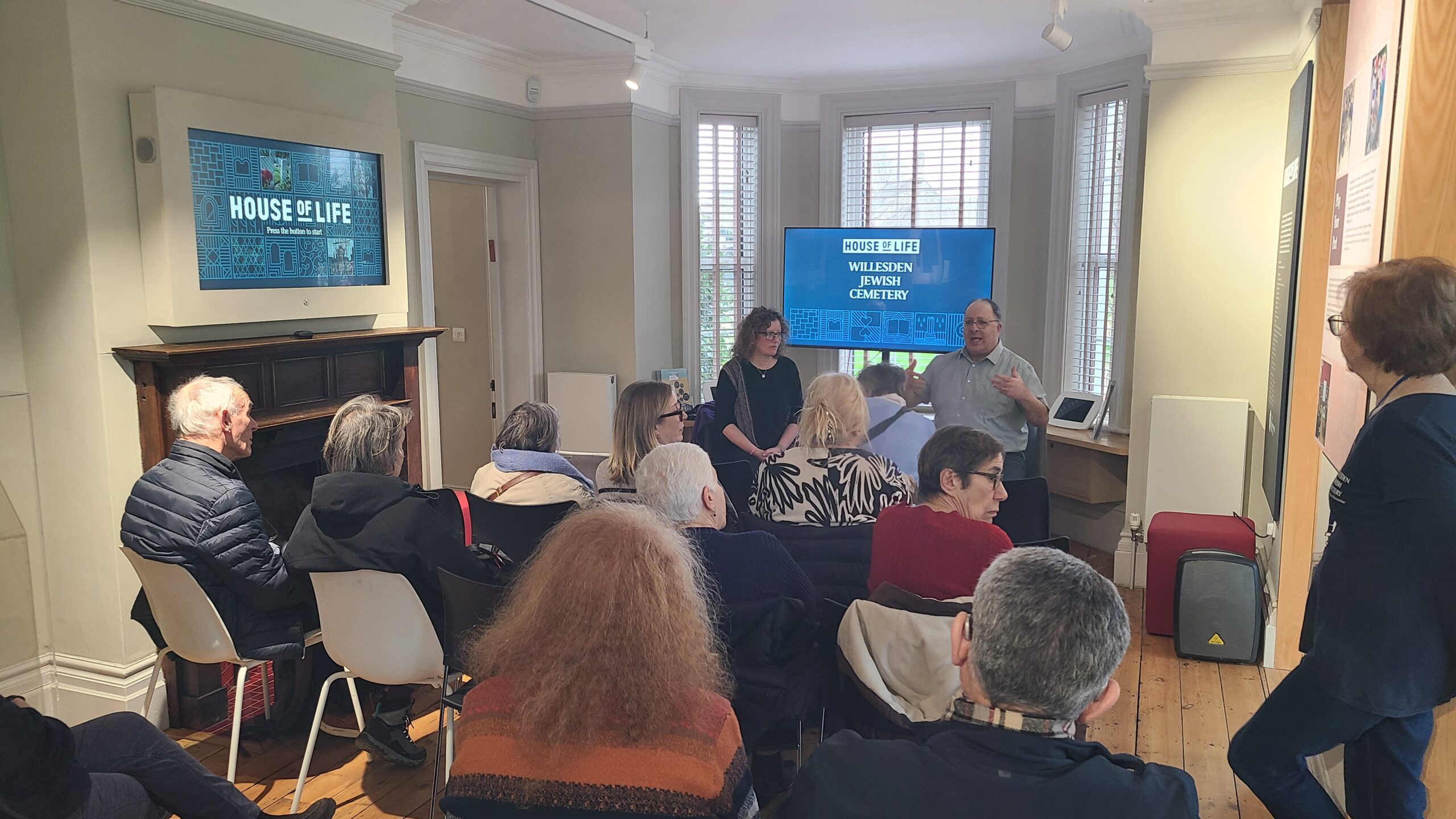
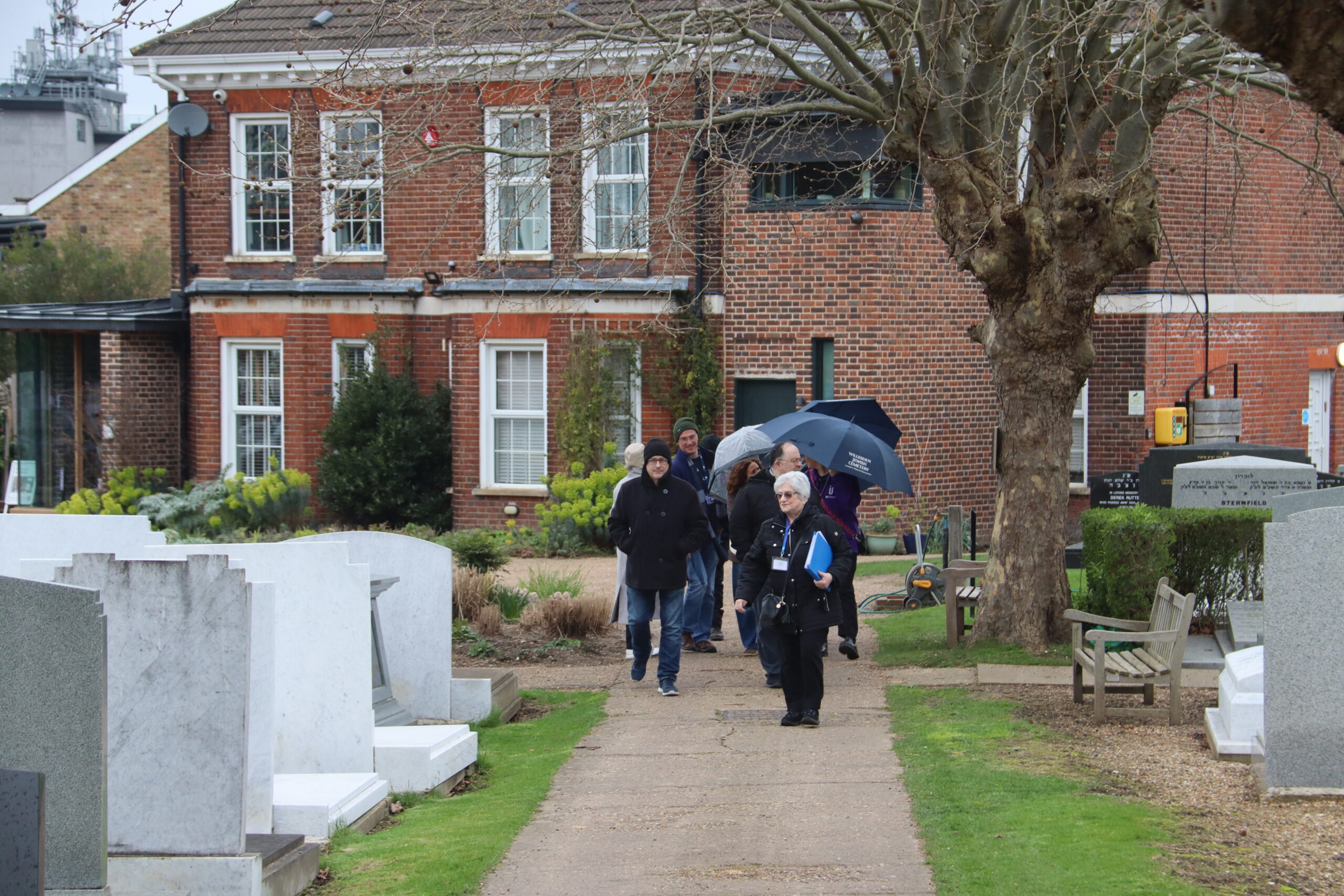
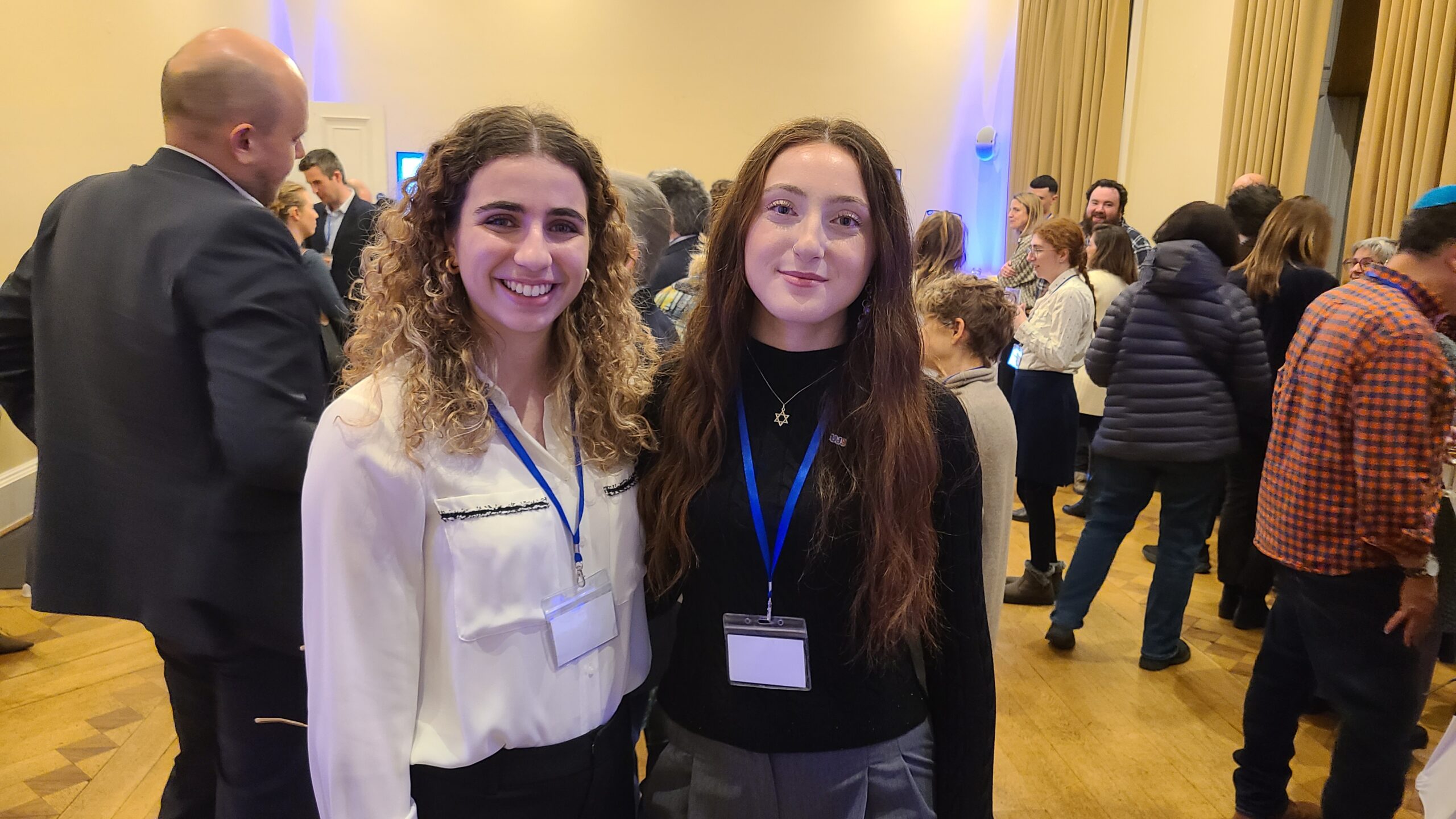
Events included an architecture tour of buildings designed by emigre and refugee architects in central London, a tour of Jewish migrants and refugees buried at the historic Willesden Jewish Cemetery, and many discussions at synagogues throughout the UK. Participants of HIAS+JCORE and UJS’ Student Refugee Ambassador Programme were also heavily involved, with students across the country organising activities.
One of the most unique events was hosted by the Jewish Society at the Central School for Speech and Drama. Run as part of Jewish Enrichment Week, students created an interactive section titled “36 Times”, with an installation featuring each verse in the Torah referencing the command to welcome and love the stranger. At the centre, a mirror labelled “The Stranger” invited personal reflection on responsibility and welcome, with participants invited to write their own commitment.
Throughout the last week, thousands of British Jews attended dozens of events to learn and take action for refugees.
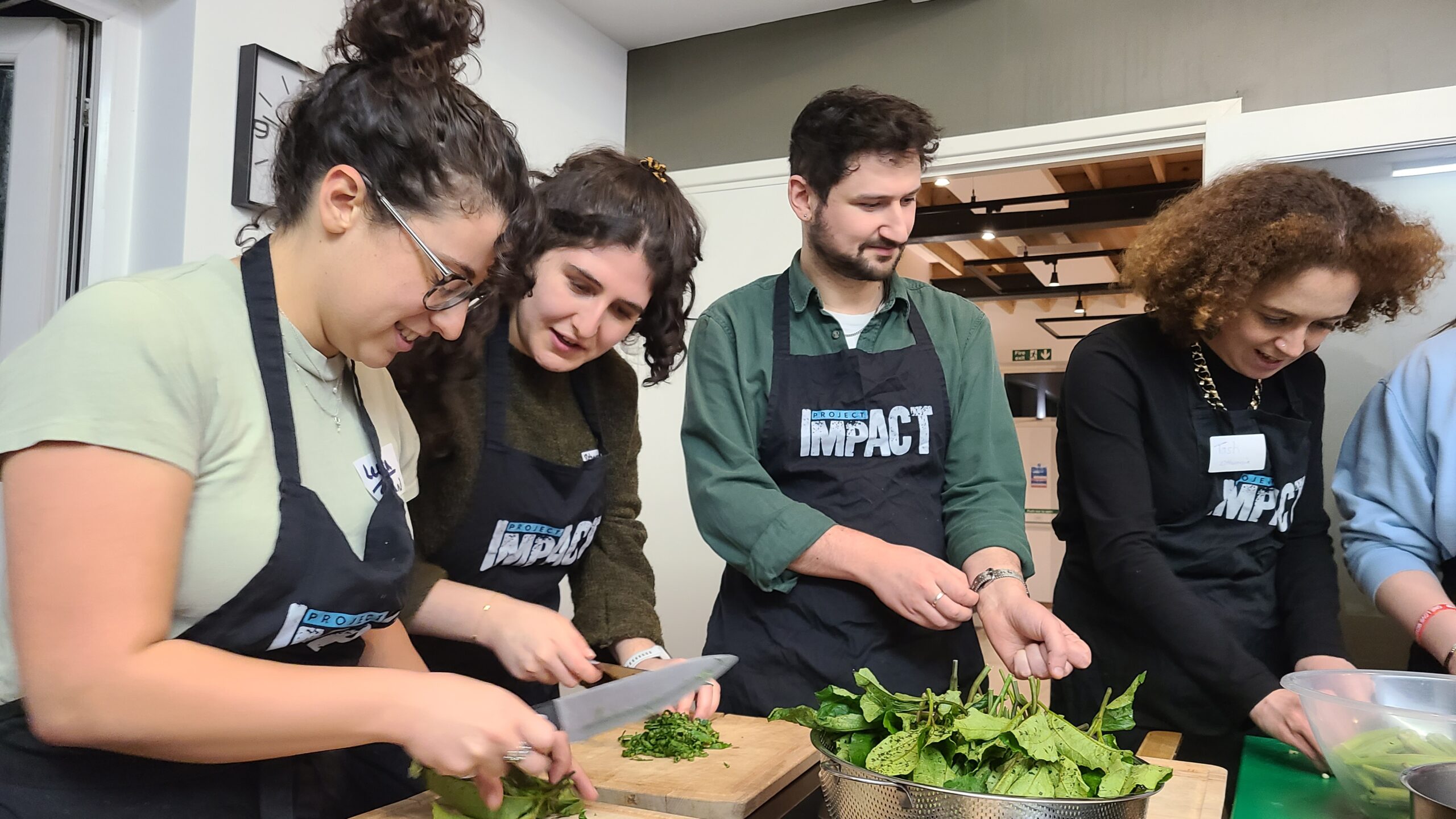
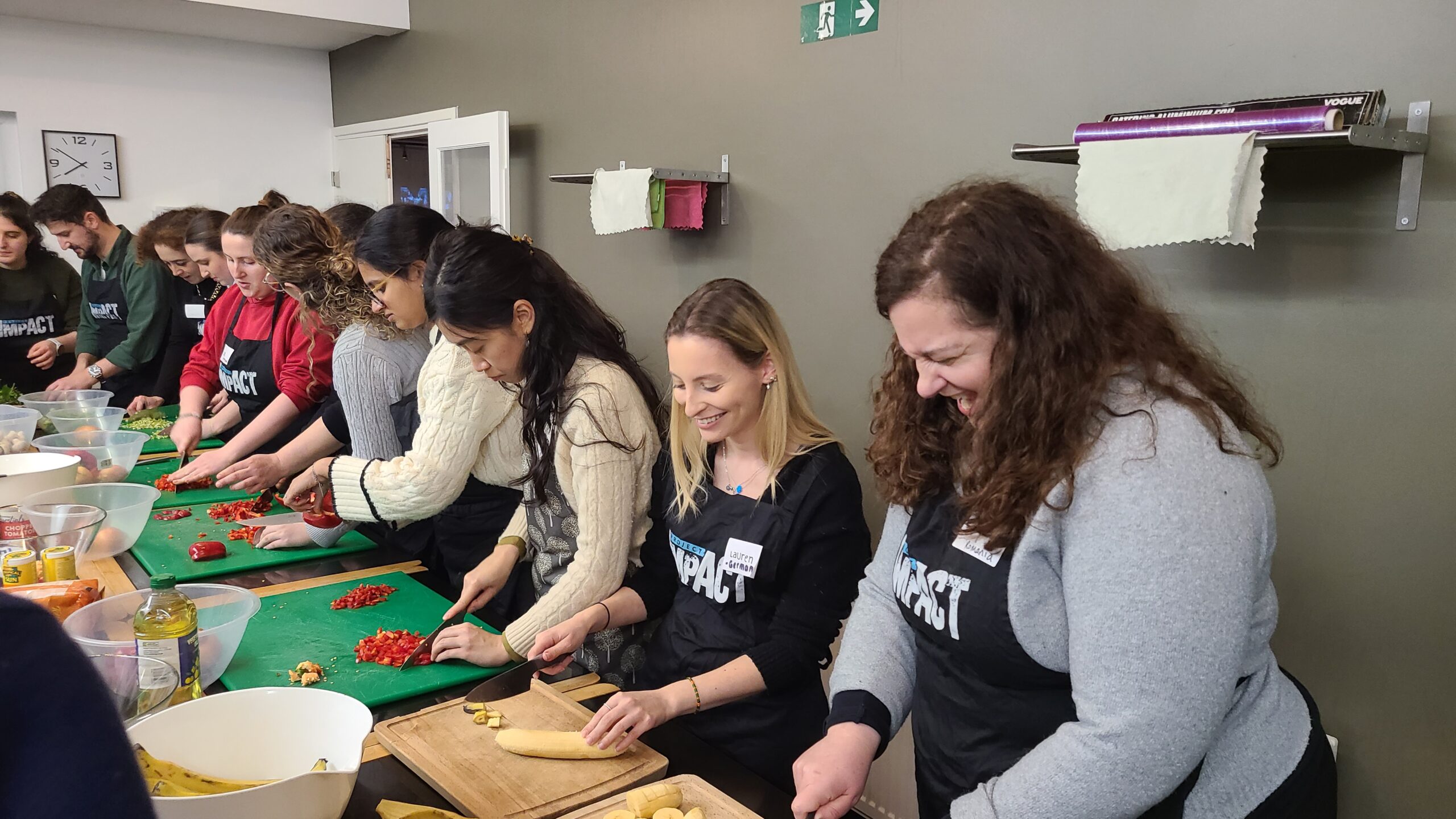
One of the first was a cooking evening hosted by HIAS and HIAS+JCORE partner OLAM, which brought together 20 supporters. One attendee, Libi, shared her frustration that “there is so much misinformation and a lack of compassion when it comes to refugees. Discussions around refugees and asylum seekers often lack nuance and kindness. Empathy and humanity should be at the forefront of any discussion about refugees.”
Charity, a former Nigerian refugee, taught attendees how to prepare a traditional meal with a vegan twist. Supporters also learned about HIAS and HIAS+JCORE’s work and how they could help refugees and people seeking asylum in the UK.
“We should never stop talking about refugees. It is our responsibility as humans to provide compassion and accommodation.”Libi, one of the attendees at our Refugee Shabbat cooking event
On Thursday, more than 50 supporters from the Jewish community and refugee sector joined HIAS+JCORE in London to launch Refugee Shabbat in the UK. The audience heard from leaders working to support refugees and people seeking asylum, with the Chief Rabbi, Sir Ephraim Mirvis KBE, providing his endorsement for Refugee Shabbat.
Speaking in a pre-recorded message, the Chief Rabbi stated that “when it comes to the plight of refugees, we readily empathise with them because we as Jewish people have known what it is like to be a refugee… we have the imperative indeed to reach out and to do whatever we can for the sake of refugees.”
Event speakers also included Progressive Judaism co-CEO Rabbi Charley Baginsky.
“Jewish responsibility does not stop at our own community’s security,” Rabbi Charley said. “It also extends to the kind of society we help shape. One where the rule of law protects the vulnerable. One where refugees are not reduced to political symbols. One where faith communities work together to build something better.”
Rabbi Charley was one of dozens of community members to attend Finchley Progressive Synagogue’s (FPS) Refugee Shabbat services on Saturday morning. Former refugees from Syria, Ukraine, and Iran spoke during the service, emphasising the facts about refugee resettlement and the asylum system in the UK.
After the event, the synagogue shared: “It was a joy for us to participate alongside so many other Jewish communities in Refugee Shabbat, and to be able to invite and honour refugees of many nationalities who have worked with us for the benefit of refugees over so many years.”
Refugee Shabbat events were run across the full breadth of the UK, from the South Coast to Scotland.
In Manchester, Menorah Synagogue – who have long worked alongside organisations supporting refugees – ran a profound and thoughtful discussion. A community member later said: “It was most certainly a success and demonstrated that there is support and interest in the community. It was a fascinating discussion and a very thought-provoking day.”
It’s clear Refugee Shabbat is more important than ever in inspiring Jews across the world to assist displaced people wherever they are.
“There is no doubt that we’re living in a difficult period,” said Rabbi David Mason, HIAS+JCORE’s Executive Director. “But this Refugee Shabbat is a message of hope and a loud statement from the Jewish community that we are with refugees. Together, our values of compassion and solidarity are so much stronger than hate and division.”
Spotlight on Refugee Shabbat around the world
Led by HIAS, Refugee Shabbat 2026 took place across three continents, with more than 200 communities participating. Events were held in countries including the United States, Canada, and South Africa. Communities celebrated with a variety of activities, from art exhibitions to film screenings to traditional services on Friday night and Saturday morning. No matter the event, people across the world showed up to support refugees and learn how they can advocate on their behalf in this difficult moment.
“At a time when governments have slammed doors shut in the face of people seeking protection and safety, Refugee Shabbat feels particularly powerful and poignant,” said Isabel Burton, HIAS’ Senior Director for Community Engagement. “Refugee Shabbat gives us an opportunity to celebrate the inspiring actions of Jewish communities around the world, who are stepping up to respond in real time to these new realities. Together, we honour that work, support each other, and stand with refugees who simply seek sanctuary and a fresh start.”
In the United States, the Trump administration’s attacks on refugees and immigrants over the last year have been devastating. But while U.S. immigration policies have changed, the hearts and minds of American Jews have not. If anything, this year has shown the strength of communities across the country in rejecting fear of the other.
In Los Angeles, one of HIAS’ longtime partners, Temple Israel of Hollywood, hosted a Refugee Shabbat service and program to honour the Jewish value of welcome, led by Rabbi Lara Regev. The service celebrated the work of those most dedicated to welcoming newcomers. HIAS’ CEO Beth Oppenheim and HIAS’ Rabbi-in-Residence Sarah Bassin also spoke about the current landscape of refugee resettlement, and how HIAS can support community members in taking action.
“I was honoured to share words of Torah to ground ourselves through an era of moral disorientation in which our values are challenged daily,” said Rabbi Sarah.